


Biologics Market Growth and Emerging Trends Shaping the Future outlook (2023–2031)
The biologics market has emerged as one of the fastest-growing segments within the global pharmaceutical industry, driven by advancements in biotechnology, rising prevalence of chronic diseases, and increasing demand for targeted therapies. Biologics, derived from living organisms, include a wide range of products such as monoclonal antibodies, vaccines, recombinant proteins, and gene therapies. These therapies offer higher specificity and effectiveness compared to traditional small-molecule drugs, making them indispensable in modern healthcare systems.
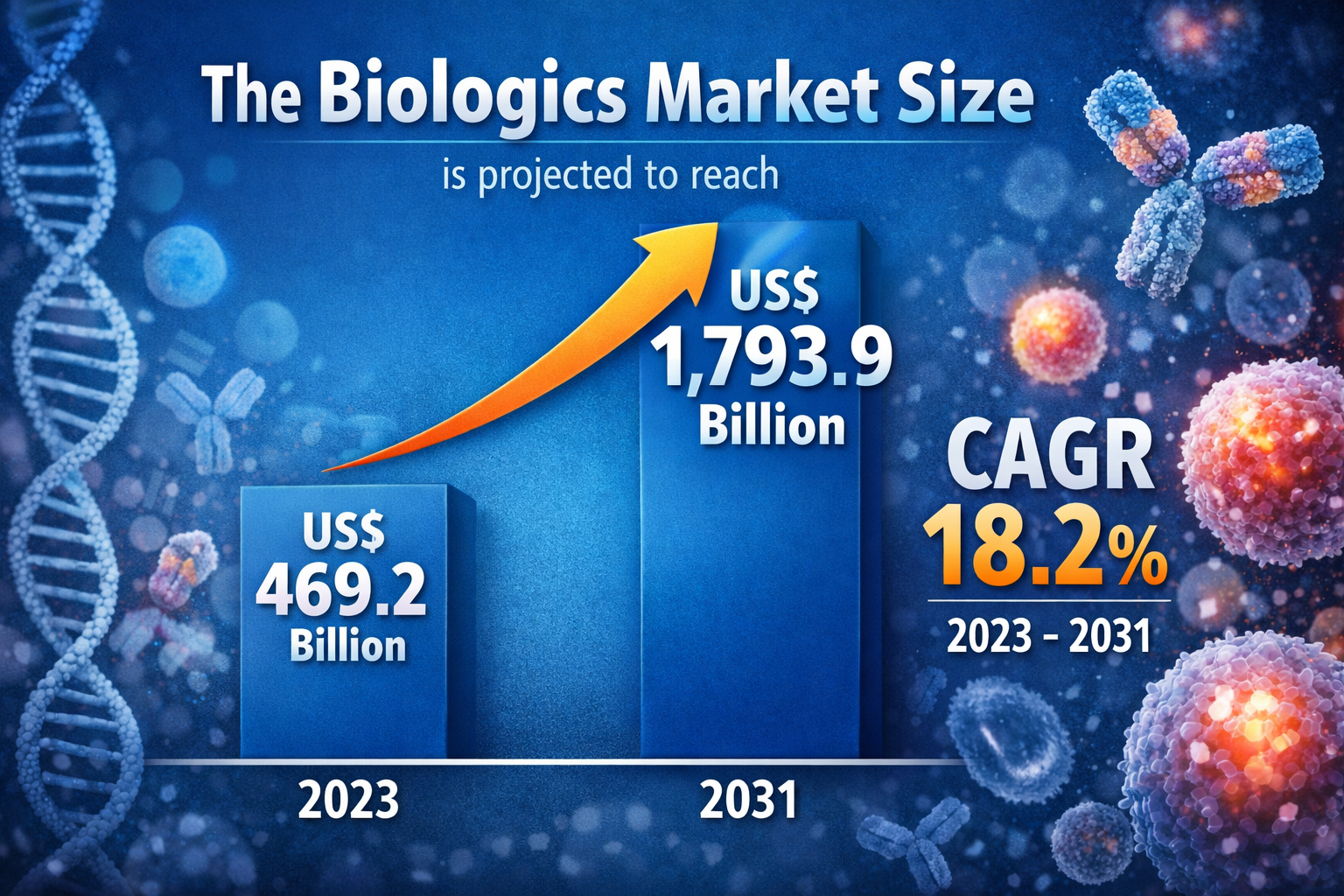
The Biologics Market Trend highlights a shift toward personalized medicine, biosimilars adoption, and outsourcing of manufacturing processes, which are collectively accelerating market expansion. The biologics market size is projected to reach US$ 1,793.9 billion by 2031 from US$ 469.2 billion in 2023 and CAGR of 18.2% in 2023–2031. This remarkable growth reflects strong investments in research and development, increased approvals of biologic drugs, and expanding applications across oncology, autoimmune diseases, and infectious conditions.
Get Sample PDF @ https://www.theinsightpartners.com/sample/TIPRE00002765
One of the primary drivers of the biologics market is the rising global burden of chronic diseases such as cancer, diabetes, and autoimmune disorders. With millions of deaths attributed to chronic conditions annually, there is an increasing need for advanced therapies that provide targeted treatment with fewer side effects. Biologics play a crucial role in addressing these needs by interacting with specific components of the immune system, thereby improving treatment outcomes. Additionally, the aging population worldwide further contributes to the demand for biologics, as older individuals are more susceptible to chronic illnesses.
Technological advancements in biotechnology and genetic engineering have significantly enhanced the development and production of biologics. Innovations such as cell line engineering, gene editing, and improved expression systems are enabling manufacturers to produce high-quality biologics with greater efficiency. Moreover, the emergence of biosimilars is reshaping the competitive landscape by offering cost-effective alternatives to original biologic drugs, thereby increasing patient access and affordability.
Another key factor influencing the biologics market is the growing trend of outsourcing manufacturing processes. Many pharmaceutical companies are partnering with contract development and manufacturing organizations (CDMOs) to optimize production capabilities, reduce costs, and accelerate time-to-market. This shift toward outsourcing is particularly beneficial for small and medium-sized biotech firms that may lack the infrastructure required for large-scale biologics production. As a result, the outsourced manufacturing segment is expected to witness significant growth during the forecast period.
Geographically, North America dominates the biologics market due to its well-established healthcare infrastructure, high R&D investments, and presence of leading biopharmaceutical companies. The region also benefits from favorable regulatory frameworks and strong reimbursement policies that support the adoption of biologic therapies. Meanwhile, the Asia-Pacific region is anticipated to register the highest growth rate, driven by increasing healthcare expenditure, expanding biotechnology capabilities, and rising awareness about advanced treatment options. Countries such as China and India are becoming key hubs for biologics manufacturing and research, further contributing to regional market growth.
The biologics market is also witnessing increased collaboration and strategic partnerships among industry players. Companies are focusing on mergers, acquisitions, and joint ventures to strengthen their product portfolios and expand their global presence. Additionally, investments in innovative therapies such as cell and gene therapies are expected to open new avenues for market growth. These therapies have the potential to address previously untreatable conditions, making them a significant area of focus for pharmaceutical companies and research institutions.
Despite its promising growth trajectory, the biologics market faces several challenges. High development and manufacturing costs, stringent regulatory requirements, and complex production processes can hinder market expansion. Furthermore, issues related to storage, transportation, and distribution of biologics require specialized infrastructure, adding to overall costs. However, ongoing advancements in technology and regulatory frameworks are expected to mitigate these challenges over time.
Related Report:
1) Geratric Medicines Market Growth, Size & Forecast by 2034
2) Oxycodone Drugs Market Size, Share & Growth by 2034
3) Plasma Protein Therapeutics Market Growth, Trends & Demand by 2034
About Us -
The Insight Partners provides comprehensive syndicated and tailored market research services in the healthcare, technology, and industrial domains. Renowned for delivering strategic intelligence and practical insights, the firm empowers businesses to remain competitive in ever-evolving global markets.
Contact Information –
Email: sales@theinsightpartners.com
Phone: +1-646-491-9876
Also Available in : Korean German Japanese French Chinese Italian Spanish

 Arabic
 French
 Spanish
 Portuguese
 Deutsch
 Turkish
 Dutch
Dutch
 Italiano
 Russian
 Romaian
 Portuguese (Brazil)
 Greek
Greek